

The Shift Nobody Saw Coming
A client called us three months ago. They were running their purchase order approval process across WhatsApp, email, and a shared Excel sheet on Google Drive. Three people. Seventy steps. Every. Single. Day.
We’ve seen this pattern dozens of times. The workflow isn’t broken — it works, technically. But it’s held together with human attention, and human attention is finite. One person goes on leave and the whole thing stalls. One message gets buried in a WhatsApp thread and a supplier doesn’t get paid for six weeks.
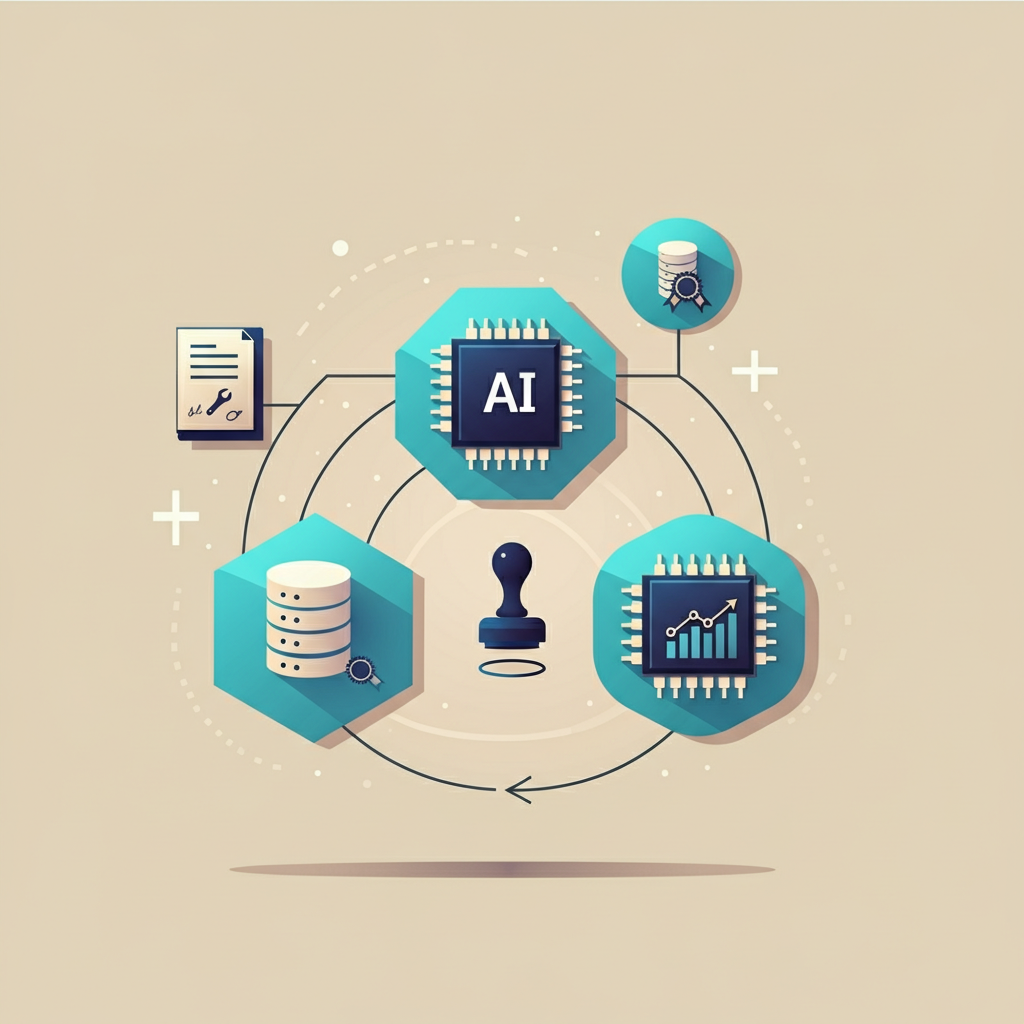
What changed — quietly, over the past two years — is that the industry stopped trying to make one AI model do everything and started building systems where multiple AI agents collaborate. Each agent has a defined role, a set of tools, and a slice of memory. They plan, delegate, execute, verify, and hand off work to each other.
Gartner put Multiagent AI Systems in their top four strategic technology trends for 2026. That’s not analyst hype. That’s a signal that the architecture of intelligent software is being rewritten — and the businesses that understand this early will have a structural advantage over the ones that don’t.
For us at Tech Inject, this isn’t abstract. We build ERP systems, procurement pipelines, and custom integrations for Indian manufacturers and trading companies. Multiagent AI is the most significant shift we’ve seen in how those systems can be designed — and we’re already building with it.
What Are Multiagent Systems, Really?
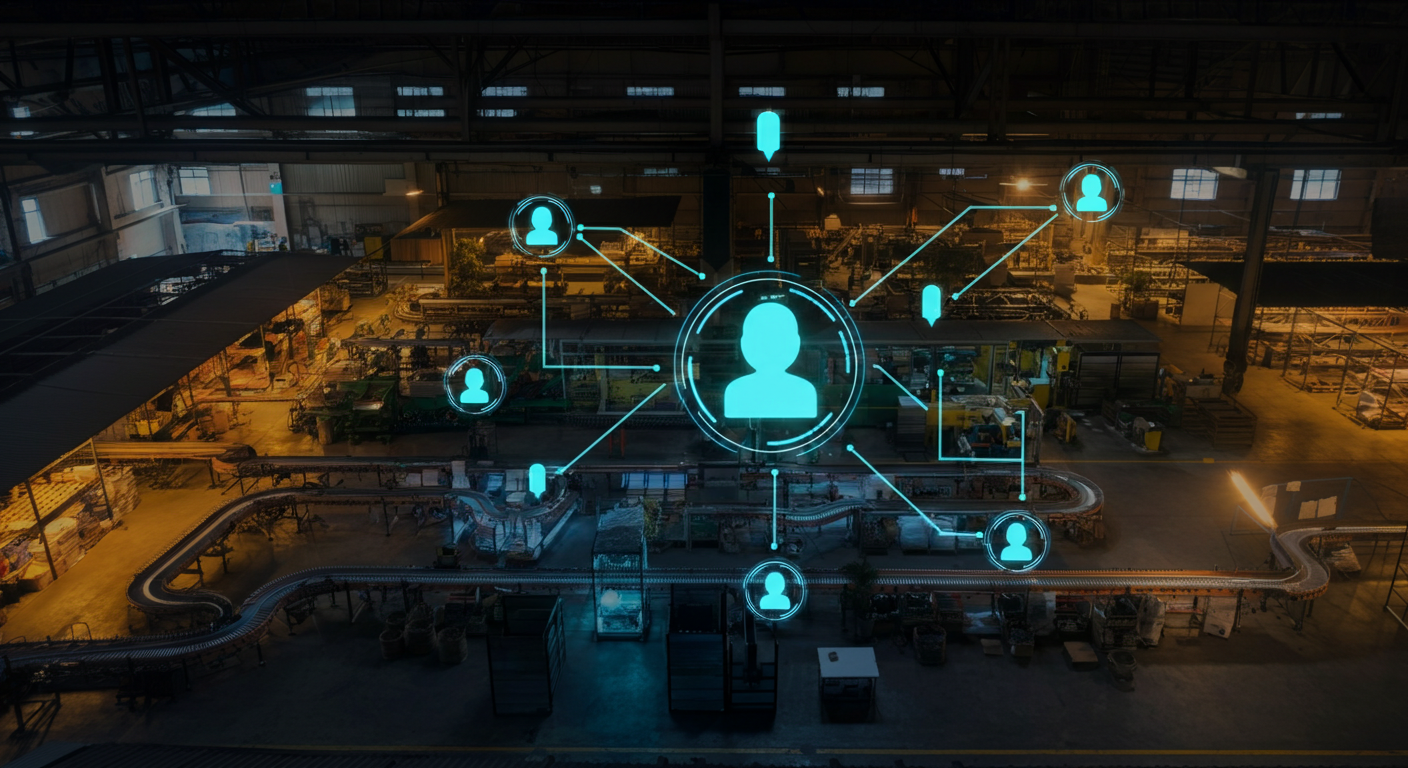
Picture a factory floor. There’s a supervisor who receives the production order and breaks it into tasks. There’s a QC inspector who checks output at each stage. There’s a dispatch coordinator who manages outbound logistics. There’s a data entry operator who updates the system of record. Each person does their job, hands off to the next, and the whole thing moves.
A multiagent AI system works the same way.
At its core, it’s a collection of AI agents — typically powered by large language models — where each agent has a specific role, a set of tools it can invoke, and the ability to communicate with other agents. Rather than one model trying to handle everything, you decompose a complex task into subtasks and assign each to a specialist.
Most multiagent architectures have two layers: orchestrators and workers. The orchestrator receives a high-level goal, breaks it into subtasks, and delegates those tasks to worker agents. Workers are specialists — one might read and parse an incoming document, another validates data against a database, another routes for approval, another updates the ERP. Some systems add a third layer: a critic or supervisor agent that evaluates output quality before anything gets passed upstream.
This is fundamentally different from chaining a few prompts together. Prompt chaining is linear and stateless — each call is independent, there’s no memory between steps unless you explicitly manage it, and there’s no ability to course-correct if an early step goes wrong. Multiagent systems are dynamic, stateful, and capable of branching, looping, and self-correcting. They can run for seconds or hours. They can invoke dozens of tools. And they can produce outputs that would require a team of people working in parallel to replicate manually.
How This Is Different From What You’ve Been Building
Prompt chaining felt like enough for a long time. Construct a prompt, call an API, parse the response, feed it into another prompt. We’ve built that pattern. It works well for a surprising range of tasks — summarization, classification, extraction, generation. But it has hard limits.
Each call is stateless. There’s no memory between calls unless you explicitly manage it. There’s no ability to take action in the world unless you build that scaffolding yourself. And there’s no way for the model to course-correct if its first attempt was wrong — the pipeline just moves on, carrying the error forward.
Multiagent systems break all of those constraints. Each agent maintains state across its execution — it knows what it’s done, what it’s waiting for, and what it still needs to do. Agents have access to tools: web search, code execution, database queries, API calls, file I/O. They can take real actions, observe the results, and adjust their behavior accordingly. Researchers call this the perceive-reason-act loop. It’s the foundation of genuinely agentic behavior, and it’s a different category of thing from what most teams are shipping today.
Inter-agent communication is another key differentiator. Agents in a multiagent system can pass structured messages to each other, request help from specialists, and report results back to an orchestrator. A task that would require a 10,000-token context window to handle in one shot can be broken into ten 1,000-token subtasks, each handled by a focused agent with a clean context. That’s not just an architectural nicety — it’s what makes these systems actually work at scale.
For developers, the mental model shift is significant. You’re no longer writing prompt templates — you’re designing agent roles, defining tool interfaces, specifying handoff protocols, and thinking about failure modes. It’s closer to distributed systems engineering than prompt engineering. If you already think in terms of microservices, message queues, and fault tolerance, you have a stronger foundation for multiagent design than you probably realize.
Real-World Use Cases in 2026
The most compelling proof that multiagent systems have arrived is the breadth of production use cases that have emerged in just the past 18 months — real organizations, real workloads, real time saved.
Start with ERP workflow automation for manufacturers, because that’s where we’ve seen the clearest ROI. A multiagent pipeline for purchase order approval works like this: one agent reads the incoming PO from email or a WhatsApp forward, one validates it against current inventory levels and approved supplier data, one routes it to the right approver based on value thresholds, and one updates the ERP once approval is confirmed. One client cut their PO approval cycle from 4 days to 6 hours. That’s not a demo result — that’s a live system running on their procurement data.
Document processing for procurement teams is the second high-value use case. GST invoices, delivery challans, vendor reconciliation reports — these are documents that arrive in inconsistent formats, require cross-referencing against multiple systems, and currently consume hours of manual effort per week. A multiagent pipeline routes each document to a classification agent, then to an extraction agent that pulls key fields, then to a validation agent that cross-references the ERP, and finally to a summarization agent that flags exceptions for human review. What once required two people now runs overnight.
Customer support triaging has been reshaped by multiagent architectures in ways that single-model chatbots never managed. Rather than one model trying to handle every type of inquiry, a triage agent classifies the request and routes it to a specialist — a billing agent, a technical support agent, a returns agent. Each specialist has access to the relevant tools and knowledge bases. Human agents handle only the genuinely complex cases.
Automated software QA is gaining serious traction. A QA agent pipeline can read a feature specification, generate test cases, execute them against a staging environment, analyze failures, and produce a structured report — all autonomously. Some teams connect the QA pipeline back to the coding pipeline so that failures trigger automatic fix attempts, closing the loop between writing and testing.
At enterprise scale, ERP and business process automation is the highest-stakes frontier. Procurement workflows, inventory reconciliation, financial close processes, HR onboarding — tasks that previously required significant back-office headcount navigating complex, multi-system workflows. The compliance requirements here are strict, which is driving real innovation in agent observability and governance tooling.
The Frameworks Making It Possible
We started with CrewAI on an internal experiment — a pipeline that would auto-generate weekly inventory summaries for one of our manufacturing clients. Define a researcher agent, a data analyst agent, a report writer agent, give them a goal, kick off the crew. It worked. The natural-language role definitions made it fast to prototype, and we had something running in a day.
Then we needed branching logic for a procurement workflow. Conditional routing based on PO value, supplier tier, and inventory status. CrewAI’s abstractions started to feel constraining. That’s when we moved to LangGraph.
LangGraph, from the team behind LangChain, takes a graph-based approach to agent orchestration. You define your agents as nodes in a directed graph, and the edges between nodes represent the conditions under which control passes from one agent to another. For workflows with complex branching logic, conditional routing, and cycles — which describes most real-world procurement and ERP workflows — LangGraph’s explicit graph structure is a significant advantage. When you’re building for Indian manufacturers who need audit trails and compliance documentation, being able to show exactly what happened and why at each step is not optional. LangGraph gives you that.
AutoGen, from Microsoft Research, takes a more conversational approach. Agents communicate by exchanging messages in a structured conversation, and the framework handles the orchestration of those conversations. It’s particularly well-suited for scenarios where you want agents to debate, critique, or collaborate in a more open-ended way — code review agents that argue about the best implementation, or research agents that challenge each other’s conclusions. If your team is already in the Microsoft ecosystem, the Azure OpenAI integration is a practical advantage.
The practical recommendation: start with CrewAI, build something real, learn the concepts. Move to LangGraph when you need production-grade control, auditability, or complex conditional logic. Consider AutoGen if your use case involves open-ended agent collaboration or you’re already on Azure. Don’t evaluate all three simultaneously — pick one and build.
What You Need to Get Started
Getting started with multiagent AI is more accessible than it might seem. But there are prerequisites and design decisions that will save you significant pain if you address them upfront.
On the technical side: solid Python skills are required — most of the major frameworks are Python-first, though JavaScript support is improving. Familiarity with at least one LLM API (OpenAI, Anthropic, and Google Gemini are the most common) is assumed. You’ll also want a basic understanding of async programming, since agent pipelines are inherently concurrent. If you’ve built REST APIs or worked with message queues, the mental models transfer well.
Choose a framework and commit to it. Start with CrewAI if you want to move fast and learn the concepts. Move to LangGraph when you need production-grade control and auditability. Don’t try to evaluate all three simultaneously.
Designing agent roles is where most teams underinvest. Resist the temptation to create a single ‘do everything’ agent — that’s just a single LLM call with extra steps and extra cost. Find the natural seams in your workflow: where does one type of expertise end and another begin? Where are the natural checkpoints where output should be validated before proceeding? Each of those seams is a candidate for an agent boundary. Start with three to five agents. Add more only when you have a clear reason.
Failure handling and cost management deserve serious attention from day one. Agent pipelines can fail in unexpected ways: an agent can get stuck in a loop, a tool call can time out, an LLM can return malformed output. Build retry logic, timeouts, and fallback behaviors into your orchestrator from the start. Set hard limits on the number of iterations any agent loop can run. Instrument every LLM call with token counts. These are not afterthoughts.
The Gotchas No One Talks About
Multiagent systems are genuinely powerful. The production reality is also messier than any demo will show you. Here are the failure modes you will encounter. Not might. Will.
We once watched an orchestrator agent retry a failed database lookup 47 times in 12 minutes because we forgot to cap the iteration count. That was a fun bill to explain to the team. Infinite loops are the most common and most expensive failure mode — an agent that can’t complete its task keeps retrying indefinitely, burning tokens and time with each iteration. The fix is straightforward: implement maximum iteration counts and explicit failure states. Most developers don’t add these guardrails until after they’ve been burned.
Hallucination compounding is subtler and more dangerous. In a single LLM call, a hallucination produces one wrong answer. In a multiagent pipeline, a hallucination in agent 1 gets passed to agent 2 as ground truth, which builds on it, which passes a more elaborate hallucination to agent 3, and so on. By agent 4, you have a confident, detailed, completely wrong answer — and nearly no way to trace it back to its source without proper observability. Validation agents — agents whose sole job is to fact-check or sanity-check the output of other agents — are an important mitigation. They add latency and cost. Add them anyway.
Debugging complexity will humble you. When a single LLM call produces a bad result, the debugging process is straightforward: look at the prompt, look at the output, adjust. When a multiagent pipeline produces a bad result, you need to trace the execution across multiple agents, multiple tool calls, and potentially multiple LLM providers. Good observability tooling — LangSmith, Arize, Weights & Biases — is not optional in production multiagent systems. Budget time to instrument your pipelines properly before you go to production.
Latency is consistently underestimated. Each agent in a pipeline adds at least one LLM call, and LLM calls are slow — typically 1 to 10 seconds each, depending on the model and output length. A pipeline with five agents, each making two LLM calls, has a minimum latency of 10 to 100 seconds before you account for tool calls, retries, or network overhead. For user-facing applications, this is often unacceptable. Design your pipelines with latency budgets in mind from the start, and think hard about which steps can run in parallel versus which must be sequential.
Where This Is All Heading
Physical AI — the integration of multiagent systems with robotics and real-world sensors — is moving faster than most software developers realize. Warehouse automation, autonomous vehicles, and industrial inspection systems are already running multiagent architectures that coordinate perception, planning, and action across multiple physical and digital agents. The software patterns being developed in the digital multiagent space will increasingly apply to physical systems as the cost of robotics hardware continues to fall.
Enterprise agentic workflows are becoming a board-level conversation. CIOs are no longer asking whether to invest in AI agents — they’re asking which business processes to automate first, how to govern agent behavior, and how to measure ROI. This is creating demand for developers who understand not just how to build agent pipelines, but how to design them for compliance, auditability, and integration with existing enterprise systems.
For Indian mid-size manufacturers and trading companies specifically: the businesses that start automating their procurement, inventory, and approval workflows now will have a structural cost advantage over competitors still running on WhatsApp threads and Excel sheets in two years. That gap will not close on its own.
The developers who can build reliable, auditable, production-grade agentic systems — not just demos — will be among the most valuable in the market over the next three to five years.
Ready to Build Your First Agent Pipeline?
If you’re a manufacturing or trading business in India running critical workflows on WhatsApp threads and Excel sheets, you are a multiagent automation waiting to happen. Call us. We’ve already built parts of this for clients in your space, and we’d rather save you six months of trial and error than watch you rediscover the same lessons we learned the hard way.
For developers: don’t read another article. Build something. Start small — a three-agent pipeline that does something useful in your current domain. A research agent that pulls data from a source, a processing agent that validates or transforms it, and a reporting agent that produces a structured output. You’ll learn more from that exercise than from reading ten more posts like this one.
The concepts — orchestrators and workers, agent state, tool use, failure handling — will click into place the moment you have a real pipeline running and watch it navigate a task autonomously. And when it fails in an unexpected way, which it will, you’ll develop the intuition for multiagent debugging that no tutorial can fully teach.
That failure is part of the education. Don’t skip it.